
Sustainability
Turning India's waste tyres into clean industrial energy
Waste tyres and plastics are an environmental burden. Pyrolysis turns them into resources and gives your plant a lower-impact fuel.
The problem
Tyres don't disappear
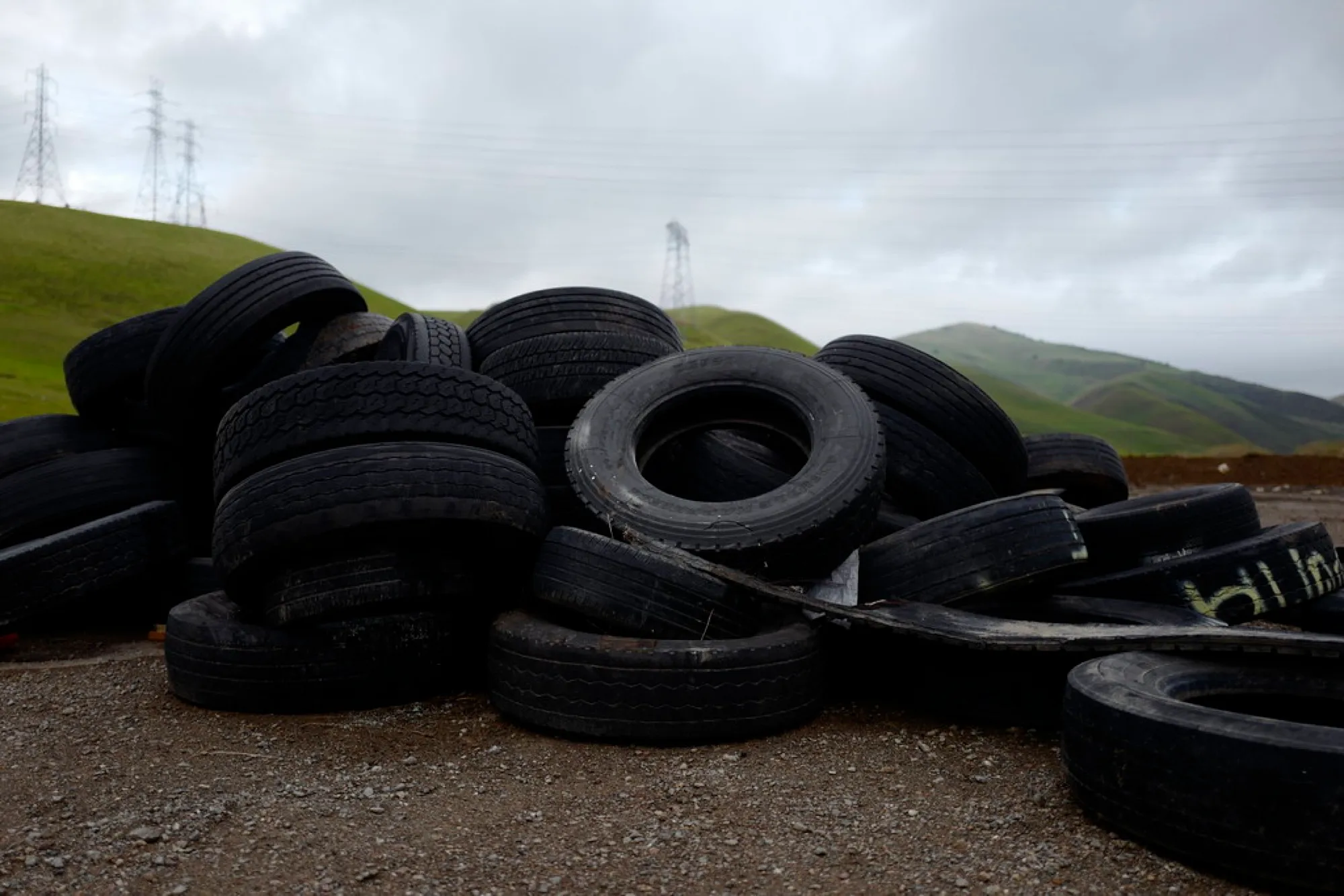
India generates millions of end-of-life tyres every year. Most are dumped, stockpiled or burned in the open. Each option harms air, soil and public health.
Non-recyclable plastics create the same problem, clogging drains and landfills for generations.
Pyrolysis recovers the energy and materials locked inside this waste, in a closed system regulated by pollution control boards.
Environmental benefits
Why pyrolysis is better for the planet
Diverts waste from landfill
Tyres take centuries to break down. Pyrolysis turns them into useful products within hours.
Stops open burning
Open burning of tyres releases toxic smoke. Controlled pyrolysis captures the energy safely.
Displaces fossil fuel oil
Every litre of TPO burned replaces a litre of crude-derived furnace oil or LDO.
Recovers every output
Oil, carbon black, steel and gas are all reused, so close to 100% of the tyre is recovered.
Self-powered process
Non-condensable gas from the reactor heats the next batch, cutting external fuel use.
Closed-loop water
Cooling water is recirculated, with no liquid effluent discharged [to confirm].
Circular economy
Nothing in a tyre goes to waste
Typical recovery from one tonne of tyres (indicative) [to confirm].
-
40–45%
Pyrolysis oil
Industrial fuel
-
30–35%
Carbon black
Fuel, pigment, filler
-
10–15%
Steel wire
Steel melting
-
10–12%
Syngas
Reactor fuel

Sustainability
Every tanker we deliver keeps waste tyres out of landfills.
India discards millions of tyres every year. We turn them into fuel, carbon and steel — closing the loop and giving your plant a lower-impact energy source.
- Tonnes of waste tyres recycled
- 1,20,000+
- Est. CO₂e avoided vs. open burning & landfill
- 38,000 t
- Liquid effluent discharged — closed-loop cooling
- Zero
Figures are placeholders [to confirm] — publish only verified, audited numbers.
Support your ESG goals
Switching to a fuel recovered from waste gives your plant a measurable sustainability story for customers, auditors and annual reports.
- Recycled-fuel declaration on request [to confirm]
- Volumes supplied, for your sustainability reporting
- Supports alternative fuel (AFR) targets in cement
- Copies of our environmental authorisations
Make your next fuel order a greener one
Tell us your monthly consumption and location. We will send a landed price, specs and a sample plan within one working day.