ProcessPyrolysisSustainability
How Pyrolysis Oil Is Made: From Waste Tyre to Industrial Fuel
Heat, no oxygen, and careful control. Here is what happens inside a tyre pyrolysis plant, step by step, and why process control decides fuel quality.
KAMRS EXIM Technical Team 5 min read
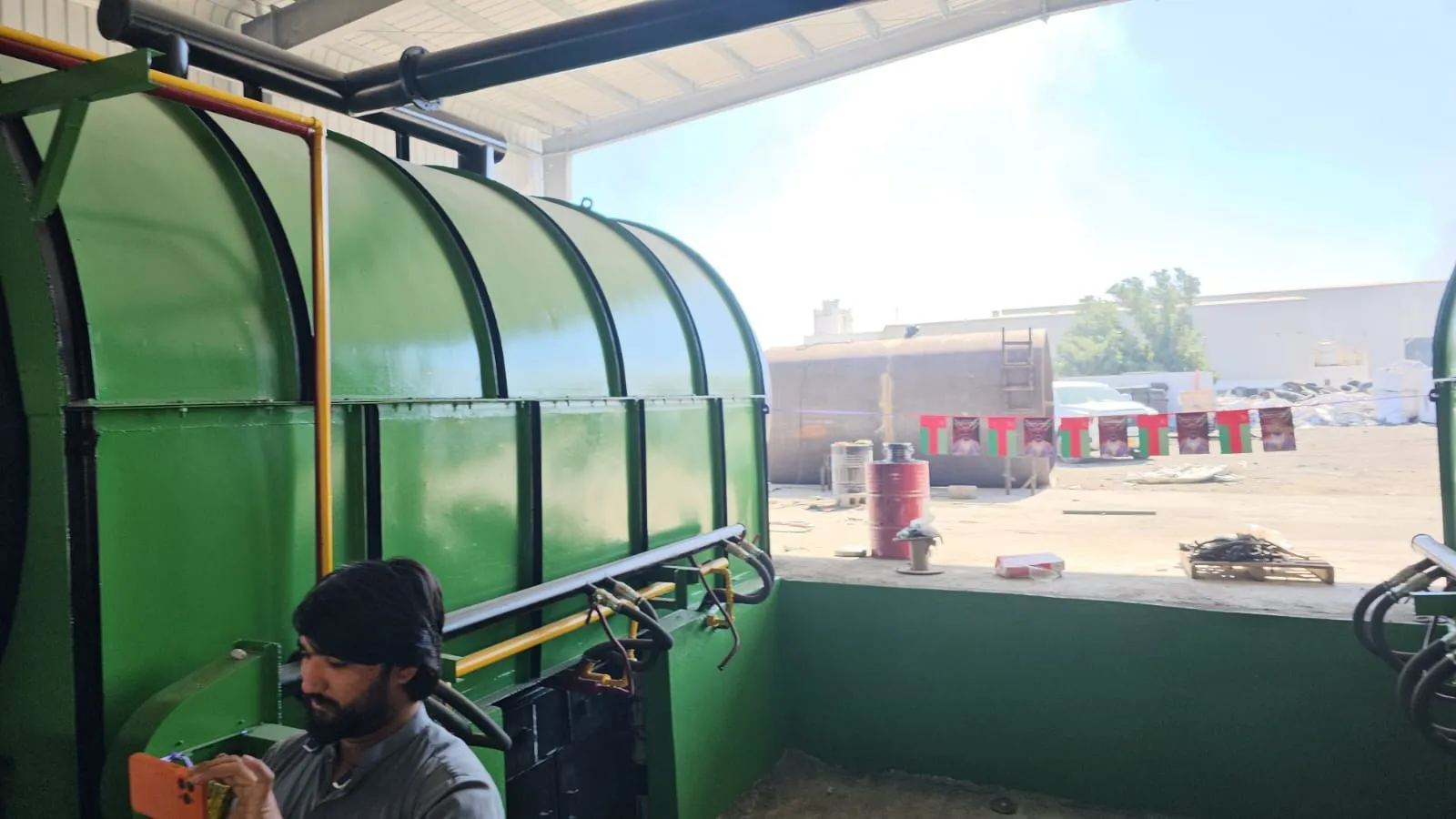
India discards a huge number of tyres every year. Tyres do not biodegrade. Dumped, they take up space and breed mosquitoes. Burned in the open, they release thick toxic smoke. Pyrolysis offers a better route: it breaks tyres down into useful products in a closed, controlled process.
Here is how a tyre becomes tyre pyrolysis oil (TPO), step by step.
What is pyrolysis?
Pyrolysis is the thermal breakdown of material in the absence of oxygen. Because there is no oxygen, the rubber does not burn. Instead its long polymer chains “crack” into smaller molecules: gases, oil vapours and solid carbon.
Step 1: Collection and inspection
End-of-life tyres are collected from authorised sources such as dealers, fleet operators and recyclers. They are inspected and sorted, and contaminated material is rejected.
Step 2: Shredding
Tyres are cut into chips or pieces of uniform size. This helps the material heat evenly inside the reactor, which gives a more consistent oil. Some plants process whole tyres, but shredding generally improves throughput and quality.
Step 3: The pyrolysis reactor
The shredded tyres are loaded into a sealed reactor and heated to roughly 400–500 °C [to confirm for your process]. As the temperature rises:
- Rubber breaks down into hydrocarbon vapours
- Steel wire stays behind as solid metal
- Carbon remains as a black solid char (recovered carbon black)
Temperature, heating rate and residence time all affect the yield and quality of the oil, so good plants monitor them continuously.
Step 4: Condensation
The hot vapours pass through a series of condensers. As they cool, the condensable fraction turns into liquid: this is crude pyrolysis oil. The light gases that do not condense are cleaned and often reused to heat the reactor, which cuts the plant’s own fuel use.
Step 5: Settling and filtration
Crude oil carries fine carbon particles and some water. It is settled and filtered in several stages to remove sediment and moisture. This step has a big effect on how the fuel behaves in your burner. Poorly filtered oil clogs nozzles and filters.
Step 6: Quality testing
Each batch is sampled and tested for key parameters such as:
- Density
- Calorific value
- Flash point
- Viscosity
- Water and sediment
- Sulphur content
Only batches that meet the specification are released for dispatch, together with a test report. See our full technical specifications.
What comes out of a tyre?
Typical output from tyre pyrolysis (indicative, varies with tyre type and process) [to confirm]:
| Output | Approx. share | Use |
|---|---|---|
| Pyrolysis oil | 40–45% | Industrial fuel oil |
| Recovered carbon black | 30–35% | Solid fuel, pigment, filler |
| Steel wire | 10–15% | Steel melting and re-rolling |
| Non-condensable gas | 10–12% | Reused to heat the reactor |
Every output finds a use, which is what makes pyrolysis a true circular economy solution. Learn more on our sustainability page.
Why process control matters to buyers
Two pyrolysis oils can look the same in a drum and still perform very differently. Consistent shredding, controlled reactor temperatures, efficient condensation and thorough filtration all lead to steady calorific value and low water content. That means fewer burner problems and predictable fuel costs for you.
See our process in detail on the Process & Quality page, or request a sample and quote.